
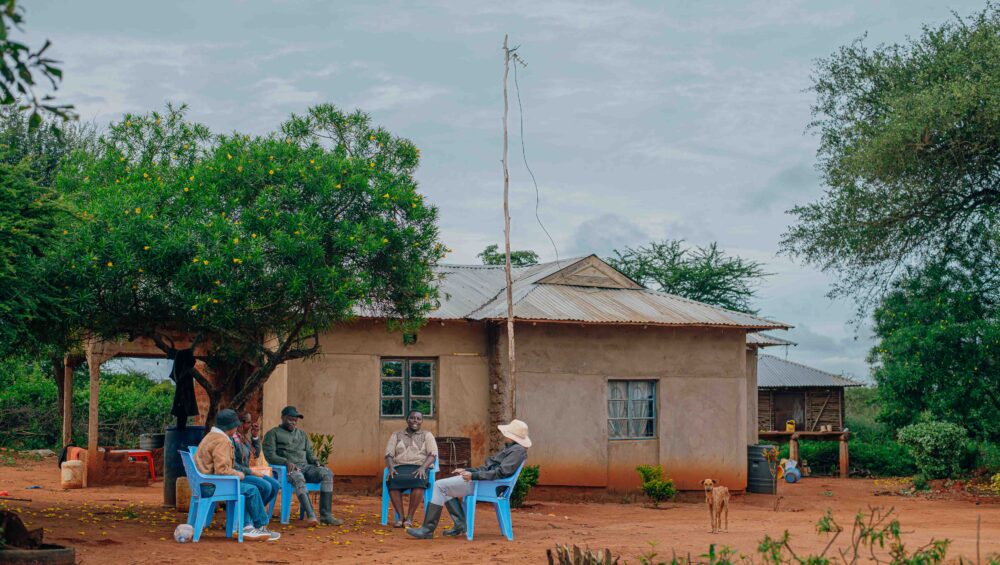
On any given day in Machakos, if you walk past Pauline’s homestead, you might find a neighbour or two visiting. Some are friends, and others strangers, but all of them have heard about the woman who grows vegetables in vertical bags, never seems to run out, and has not only stopped buying them from the market to feed her family, but has in fact begun selling them too!
Of course, they’re surprised. Wamunyu in Machakos often gets very dry, and growing vegetables year-round is no small feat – never mind the space and other resources needed to grow enough for both household use and for sale.
So these neighbours come to see these ‘bags’ for themselves and all ask the same questions. How do you get water and how much water does it take? Could I do this too? And many more! The farmer, Pauline, answers them all, showing off her thriving vertical gardens that have become something of a local landmark.
A few kilometres away, Wendy is doing something similar. She has several thriving vertical gardens too. In fact, whenever we convene in Machakos to train farmers in the region, we source our vegetables from her! Her success has made her a trusted resource for other farmers, many of whom have visited her farm to learn from her experience. Recognising her ability to teach and her role in the community as somewhat of a renowned teacher, we’ve invited Wendy to our demonstration farm, allowing her to share her knowledge with and reach even more farmers across the region.
These are our community influencers. They don’t have thousands of followers on social media, and neither do they post polished content, but they have become models for their region. When they speak, people listen. In a place where trust is built face to face, over ‘chai’, and through shared experiences, their results and influence have been more persuasive and impactful than any outreach we could have designed ourselves.
The science behind why it works
There is a behavioural science concept that helps explain what is happening in Wamunyu – social proof.
It is a phenomenon in which people look to the actions of others to determine how to behave, especially in uncertain situations. For example, when we are unsure of what to do, be it choosing a restaurant or deciding what to wear, we look to those around us for clues about the “right” way to behave.
And when deciding if something is worth trying, when someone similar to us – in circumstances, in location, etc. – is visibly succeeding at it, this becomes some of the most compelling evidence we can encounter.
In farming communities like Wamunyu where the stakes are high and the margin for error is thin, social proof is particularly powerful. For farmers like Wendy and Pauline, the barriers to trying something new cannot be overstated. Resources like water, space, time and more are limited, and so investing in something untested carries significant risk.
Therefore, when other farmers in Wamunyu see Pauline and Wendy trying something new and succeeding at it, they decide it is worth trying too. When deciding if a vertical garden is worth it, seeing Pauline’s vertical garden produce kale and spinach through the dry months, and seeing her make money from selling the surplus is not only inspiring for them, but it also serves to resolve their uncertainty. Social proof is the reason many farmers in Machakos are now requesting for vertical gardens.
It is also important to note that Pauline and Wendy are not only successful farmers, but that they are visible successful farmers. This visibility functions as a subtle advertisement to many others that says: this technique works.
Further, research on social proof shows that informational conformity (the tendency to assume others know better when we are uncertain) is a powerful driver of behaviour change. People do not just copy because they want to fit in, they copy because they believe the other person has superior knowledge of the situation.
And in Wamunyu, Pauline and Wendy have proven knowledge, and their visibility further positions them as credible and knowledgeable figures. Because they have achieved what many others aspire to, people naturally look to them as trusted sources of guidance and examples worth following.
The multiplier effect
In the months since both women and others in the region began thriving with their vertical gardens, we have seen a significant increase in the number of women in the community asking for the same.
This is as a result of farmers sharing what they know with others in the way they always have. Farmers trust other farmers. Those who have walked the same path, faced similar struggles and found a way forward.
Our position is that a training session, however well-designed, is only part of how change spreads. The majority of it happens through observation, conversation and imitation – through social proof. Therefore, while outsiders can bring tools and knowledge, influence lives within the community.
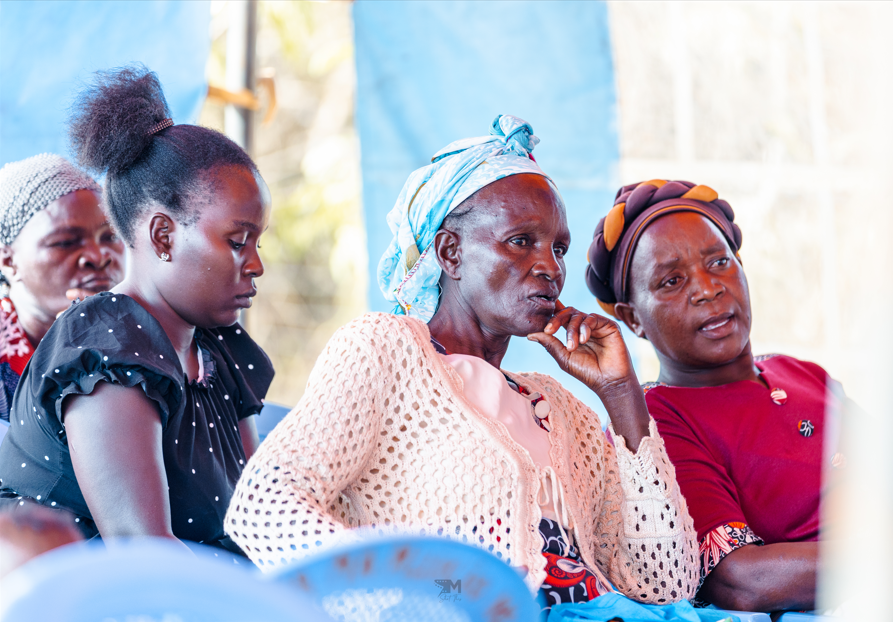
This is something we think about a lot. When we design our programmes, we consider who carries natural authority within the community – who do people go to when they want to know if something is worth trying?
Identifying those people and making sure they have the tools, techniques, knowledge and the space to succeed creates the reach that no campaign can easily replicate. We also look at which farmers are willing to go first, those who have the commitment to make a technique work visibly and well – and we invest in them knowing that their success will have an impact we would struggle to achieve ourselves.
Our curriculum is also rooted in human-centred design and behavioural science because we believe that understanding how people make decisions affects how you support them.
As we progress, we are leaning further into this approach – building on the trust that already exists and amplifying the voices that already carry weight because we realise that Pauline, Wendy and others like them are the ones who carry the work forward long after the training sessions end. We are also identifying more women like Pauline and Wendy and supporting them to become models in their communities.